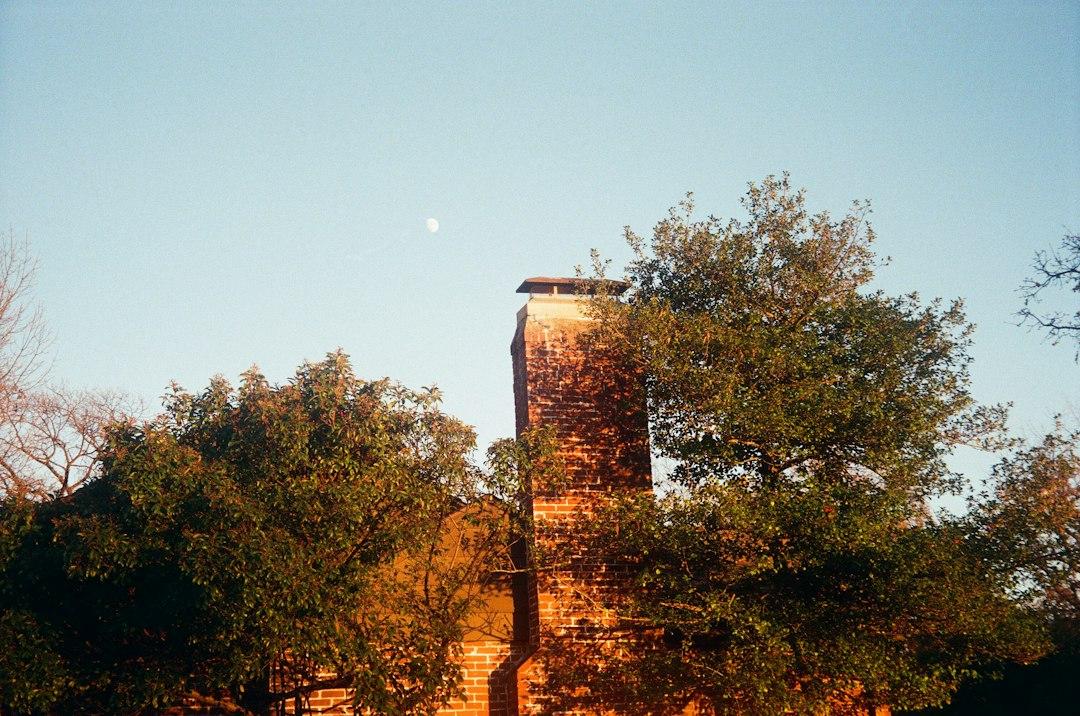
Three signs, one wet chimney
Southern California rain comes in bunches. A dry autumn, then a week in January when storm after storm crosses Orange County, and suddenly an Anaheim homeowner hears a tapping in the firebox, smells something like a wet basement whenever the heat is on, or finds the paint above the mantel lifting in a blister. All three are water, and all three usually trace back to the outside of the chimney.
The trouble with chimney water is that it rarely shows up where it gets in. It can enter at the roof, soak sideways through brick, run along a rafter and appear a few feet away. So the repair always starts with finding the entry point, not with sealing whatever looks wet.
Where the water gets in
On the houses we see across Anaheim, Placentia and Brea, the entry points fall into a short list.
The metal at the roofline. Where a roof meets a brick chimney there is a joint that has to stay watertight while the two move at different rates in heat and cold. Metal pieces bridge that joint. When a roof is replaced and the old metal is reused, or when someone covers a gap with a tube of sealant, that seam is the first thing to fail. A stain on the ceiling right beside the chimney, worst after wind-driven rain, nearly always points here.
The uphill face of a wide chimney. If the chimney is broad and sits partway down a slope, water runs down the roof and piles against its back. Leaves collect there too, holding the water against the brick. The fix is a small peaked structure behind the chimney, called a cricket, that splits the flow so it runs off to each side.
The top of the chimney. The concrete slab that caps the brick often cracks with age. Rain goes into those cracks and down through the masonry. A flue with no cover lets rain fall straight into the firebox, which is where the tapping sound comes from.
The brick itself. Old brick and soft mortar drink water like a sponge in a long storm. That is the slowest leak of the four and usually shows as a damp, musty smell rather than a drip.
What each repair involves
The written plan we hand over matches each source to its own fix, because a leak that comes from two places will not stop if only one is closed.
- Flashing. The old metal comes off, new metal goes on in two layers that overlap, and the top edge is set into a cut in the mortar so it cannot pull away. This is a flashing repair and it is the most common water job we do.
- Cricket. Framed and sheathed behind the chimney, roofed to match, and tied in with new metal.
- Crown. Small cracks can be sealed. A crown that has broken through is broken out and recast with a lip that throws water clear of the brick. That is crown repair.
- Cap. A stainless cover fastened over the flue keeps rain out and stops birds nesting. See cap installation.
- Brick. Once the joints are sound, waterproofing with a vapor-open treatment reduces how much water the brick soaks up.
What these repairs cost
Some of these have a published price; others depend on the chimney.
| Repair | Price |
|---|---|
| Leak found and stopped at the source | $545 to $3,250 |
| Cover over the flue opening | quoted after we measure |
| Peaked diverter on the high side | $435 to $985 |
| Diverter plus all-new roofline metal | $655 to $1,600 |
Crown work, waterproofing and brick repair are priced on a written quote once we have measured the chimney and seen how far the damage goes. The ranges above are wide because chimneys are: a single-flue stack on a low-slope tract roof sits at the bottom, a tall double-flue chimney on a steep tile roof with water coming in two places sits near the top.
What decides the price and the next step
Three things move a leak repair up or down: how many entry points there are, what the roof is made of, and how long the water has been getting in. Tile roofs, common in the newer parts of Anaheim Hills and Corona, take more care to work around than shingle. And a leak that has run for several winters may have softened the wood beside the chimney, which has to be dealt with before the outside is sealed.
The next step is a visit where we trace the water. If you would like one, use the quote form to tell us where the water appears indoors, whether it comes with every storm or only the windy ones, and roughly how old the roof is. Those three answers narrow the search before we arrive.
What it costs to wait
Water in a chimney does slow damage that speeds up. Wet mortar washes out, so joints open. Wet brick flakes when it dries in the summer heat. The steel damper rusts and stops closing. The wood framing beside the chimney stays damp and starts to rot, out of sight inside the wall or attic. A stain that costs a flashing repair this winter can cost framing work as well by the one after.
There is also the fireplace itself. Rain running down the flue mixes with soot and gives off that sour smell owners notice in the first warm room of winter. It also breaks down the mortar in the firebox and the smoke chamber above it.
If the leak shows up during a sale
A water stain near the chimney is one of the first things a buyer's inspector notes. If you are selling, tracing and fixing it before the house is listed takes it off the table. If you are buying, a Level 2 inspection at $380 shows whether the water has reached the flue liner. Our home sale page explains how those findings read in a report.
For the wider picture on what chimney work costs by symptom, see our guide to chimney repair cost.
Wet ceiling, sour smell or tapping in the firebox: tell us about it through our contact page and we will arrange a visit to trace it.
Have Dane Chimney Solutions Trace It
We follow the symptom to the part that failed, show it to you and put the repair price in writing first. Crews work from Anaheim across Placentia, Brea, Corona and nearby towns.